


Oncology Drugs Market
Oncology Drugs Market Insights, Competitive Landscape, and Market Forecast - 2033
Global Oncology Drugs Market Forecast
The Oncology Drugs Market is expected to grow from USD 288.9 Billion in 2026 to USD 604.2 Billion by 2033, reflecting strong industry expansion and registering a CAGR of 11.1% during the forecast period from 2026 to 2033.
Oncology Drugs Market Insights
A Look Back and a Look Forward - Comparative Analysis
The oncology drugs market growth during the historical witnessed several notable developments in oncology drugs and cancer treatments. The market was driven by the increasing prevalence of cancer worldwide and advancements in targeted therapies.
The industry witnessed substantial investments by pharmaceutical companies in research and development activities.
Pfizer's acquisition of Seagen for US$ 43 billion underscores the industry's commitment to enhancing its oncology portfolio, particularly in the realm of antibody-drug conjugates (ADCs).
The oncology drugs industry is anticipated to witness a surge over the forecast period. The growth is likely to be attributed to introducing new oncology drugs and integrating advanced technologies such as AI in drug development. Increasing adoption of immunotherapies and personalized medicine approaches is predicted to propel the market.
Key Growth Determinants
- Rising Prevalence of Cancer
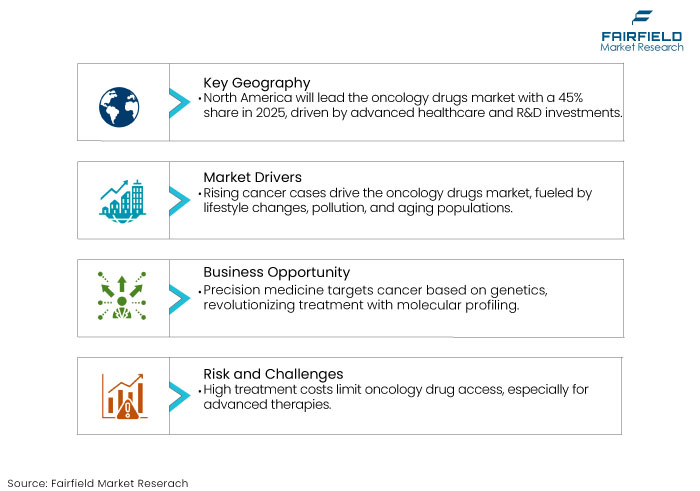
Growing incidence of cancer worldwide is a critical driver for the oncology drugs market. With changing lifestyles, increased pollution, and aging populations, the number of cancer cases is rising at an alarming rate.
According to the World Health Organization, cancer cases are predicted to increase by nearly 47% from 2020 to 2040, emphasizing the urgent need for effective treatments.
Cancers like breast, lung, and colorectal cancer are now more prevalent due to factors like sedentary lifestyles, poor diets, and tobacco use. The surge in cases amplified the demand for advanced drugs for oncology.
Pharmaceutical companies are racing to address this need by developing innovative therapies to improve survival rates and enhance the quality of life. Targeted therapies and immunotherapies have shown remarkable efficacy in treating specific cancer types, attracting significant investment in research and development activities.
- Advancements in Precision Medicine and Immunotherapy
Technological development in precision medicine and immunotherapy is transforming cancer treatment, making it a pivotal growth driver for the oncology drugs market. Precision medicine tailors treatments to a patient's genetic profile, ensuring maximum efficacy with minimal side effects. Drugs targeting mutations like HER2 in breast cancer or EGFR in lung cancer have drastically improved patient outcomes.
Immunotherapies like CAR-T cell therapy and checkpoint inhibitors represent another ground-breaking advancement. These new oncology drugs harness the body's immune system to fight effectively fight cancer. Treatments like pembrolizumab (Keytruda) and nivolumab (Opdivo) have set new standards for managing cancers like melanoma and non-small cell lung cancer.
According to the report, as of 2023, the success rate for CAR-T cell therapy in relapsed or refractory B-cell acute lymphoblastic leukemia (ALL) is approximately 80% to 90% in specific patient populations.
Key Growth Barriers
- High Costs of Oncology Drugs
High cost of cancer treatments is a prominent restraint in the oncology drugs market. Advanced therapies like immunotherapy, CAR-T cell treatments, and targeted drugs for oncology come with hefty price tags.
CAR-T therapies like Kymriah and Yescarta can cost up to US$ 400,000 per patient. These excessive costs make new oncology drugs inaccessible to many, especially in low and middle-income countries.
Even in developed nations, the financial burden of these treatments can lead to significant expenses for patients despite insurance coverage. This financial strain affects treatment adherence and limits the broader adoption of new oncology drugs.
High development and manufacturing costs of such therapies, coupled with stringent regulatory requirements, further contribute to their steep pricing. Addressing this challenge will require innovative pricing models and expanded patient assistance programs to make these life-saving drugs more accessible.
Oncology Drugs Market Trends and Opportunities
- Adoption of Personalized Medicine
Personalized or precision medicine tailor’s cancer treatments based on a patient's genetic makeup, tumour characteristics, and individual health profile. These treatment strategies are particularly beneficial in targeting specific genetic mutations that drive cancer growth, like HER2-positive breast cancer or EGFR-mutant lung cancer. Molecular profiling and diagnostic tool advancements have revolutionized how doctors approach cancer treatment.
Introduction of drugs targeting specific genetic markers, like trastuzumab for HER2-positive breast cancer or osimertinib for EGFR-mutant lung cancer, have marked significant milestones in the oncology drugs market. Rapid development of companion diagnostics has enabled oncologists to identify patients likely to benefit from these new oncology drugs, enhancing their precision and effectiveness.
According to studies, personalized immunotherapies for melanoma have increased the 5-year survival rate for advanced melanoma patients to 52%, from the historical survival rates of just 5% to 10%.
- Expansion of Immunotherapy Treatments
Rise of immunotherapy presents a significant opportunity for growth in the oncology drugs market. Immunotherapy, which leverages the body's immune system to fight cancer, has emerged as a breakthrough treatment for several types of cancer.
As research progresses, there is a growing opportunity to expand immunotherapy to a broader range of cancers and patient populations. Combination therapies, where immunotherapies are paired with traditional treatments like chemotherapy or radiation, are being explored to enhance the overall effectiveness of cancer care.
The increasing focus on immunotherapy attracts significant investment from pharmaceutical giants and emerging biotech companies, driving innovation and further expanding the oncology drugs market. The continued development of new oncology drugs could revolutionize cancer treatment, offering patients more options and improving survival rates across multiple cancer types.
How is Regulatory Scenario Shaping this Industry?
The regulatory landscape in the oncology drugs market plays a pivotal role by driving innovation while ensuring patient safety. Regulatory bodies like the FDA and EMA are streamlining approval processes for oncology drugs.
Expedited pathways like Breakthrough Therapy Designation and Accelerated Approval allow new oncology drugs to reach the market faster, particularly for rising medical needs. Initiatives to enhance clinical trial designs, such as basket and adaptive trials, facilitate quicker and effective drug evaluations.
Regulatory frameworks promote collaboration between pharmaceutical companies and regulatory authorities to foster innovation and address safety concerns. The oncology drugs market is witnessing stringent post-marketing surveillance to monitor the real-world performance of newly approved treatments.
Segment Covered in the Report
- High Prevalence of Chronic lymphocytic Leukaemia Highlights the Need for Advanced Drugs
Chronic lymphocytic leukaemia is predicted to lead the segment with a share of 20% in 2025. Chronic lymphocytic leukaemia category collectively drives demand for innovative treatments. High prevalence of these conditions highlights the critical need for advanced drugs for oncology.
Chronic lymphocytic leukaemia dominance is fuelled by ground-breaking advancements in therapies, particularly targeted treatments and immunotherapies. New oncology drugs like CAR-T therapies, have shown remarkable success, decreasing the risk of death in multiple myeloma patients by 45%.
Pharmaceutical giants are heavily investing in expanding their oncology portfolios. The strong focus on blood cancers, supported by innovative therapies and strategic investments, underscores their prominence in the oncology drugs market.
- Hospital Pharmacies Ability to Provide Integrated Care Facilitate Demand
In the oncology drugs market, hospital pharmacies serve as the primary distribution channel, accounting for 58% of the market share in 2025. Hospitals are central to the administration of complex cancer treatments, including chemotherapy, immunotherapy, and the latest targeted therapies.
The complex nature of these treatments often necessitates professional healthcare settings to ensure patient safety and optimal outcomes. Hospitals provide comprehensive care, integrating diagnosis, treatment, and ongoing monitoring, which is crucial for managing cancer's multifaceted challenges.
Hospitals often have access to new oncology drugs through clinical trials and early access programs, offering patients cutting-edge therapies that are not yet available in retail pharmacies.
Regional Analysis
- Early Acceptance of Novel Cancer Treatments in North America Facilitate Growth
North America is predicted to emerge as the leading region in the global oncology drugs market with a share of 45% in 2025. The region’s dominance is attributed to its sophisticated healthcare systems and high investments in research and development activities.
Early acceptance of novel cancer treatments, including targeted medicines and immunotherapies further facilitates growth. Regulatory bodies like the FDA and EMA are crucial in their respective regions, enforcing stringent drug approval protocols and influencing market dynamics.
The U.S., with its significant concentration of prominent biopharmaceutical firms and healthcare infrastructure, constitutes 40% of the market in North America. Increased acceptance of premium-priced specialty medications by patients and physicians has facilitated companies' successful market entry with their novel medicinal products.
- Asia Pacific to Witness Fastest Growth over the Forecast Period
Asia Pacific is anticipated to emerge as the fastest-growing market for oncology drugs. Enhancing healthcare accessibility, along with increased disposable incomes in countries like China and India, is facilitating market growth.
China and India offer minimal manufacturing and research and development expenses, enticing biopharmaceutical companies to increase local production of generics and biosimilars. This facilitates affordability of oncology treatment.
Growing patient awareness regarding early identification and cancer management signifies substantial long-term business potential. Japan occupies a significant role due to its universal health care, which guarantees extensive access.
Prominent Players in Global Oncology Drugs Market
• Hoffmann-La Roche Ltd.
• AbbVie Inc.
• Novartis AG
• Pfizer Inc.
• AstraZeneca
• GSK plc
• Eli Lilly and Company
• Sanofi
• Bayer AG
• Merck & Co., Inc.
The Global Oncology Drugs Market is Segmented as Below
By Drug Class
• Cytotoxic Drugs
• Targeted Drugs
• Hormonal Drugs
By Indication
• Lung Cancer
• Stomach Cancer
• Colorectal Cancer
• Breast Cancer
• Prostate Cancer
By Dosage Form
• Solid
• Liquid
• Injectable
By Distribution Channel
• Hospital Pharmacies
• Retail Pharmacies
• Online Pharmacies
By Region
• North America
• Europe
• Asia Pacific
• Latin America
• Middle East & Africa
- Executive Summary
- Global Oncology Drugs Market Snapshot
- Future Projections
- Key Market Trends
- Regional Snapshot, by Value, 2026
- Analyst Recommendations
- Market Overview
- Market Definitions and Segmentations
- Market Dynamics
- Drivers
- Restraints
- Market Opportunities
- Value Chain Analysis
- COVID-19 Impact Analysis
- Porter's Five Forces Analysis
- Impact of Russia-Ukraine Conflict
- PESTLE Analysis
- Regulatory Analysis
- Price Trend Analysis
- Current Prices and Future Projections, 2025-2033
- Price Impact Factors
- Global Oncology Drugs Market Outlook, 2020 - 2033
- Global Oncology Drugs Market Outlook, by Drug Class, Value (US$ Bn), 2020-2033
- Cytotoxic Drugs
- Targeted Drugs
- Hormonal Drugs
- Global Oncology Drugs Market Outlook, by Indication, Value (US$ Bn), 2020-2033
- Lung Cancer
- Stomach Cancer
- Colorectal Cancer
- Breast Cancer
- Prostate Cancer
- Global Oncology Drugs Market Outlook, by Dosage Form, Value (US$ Bn), 2020-2033
- Solid
- Liquid
- Injectable
- Global Oncology Drugs Market Outlook, by Distribution Channel, Value (US$ Bn), 2020-2033
- Hospital Pharmacies
- Retail Pharmacies
- Online Pharmacies
- Global Oncology Drugs Market Outlook, by Region, Value (US$ Bn), 2020-2033
- North America
- Europe
- Asia Pacific
- Latin America
- Middle East & Africa
- Global Oncology Drugs Market Outlook, by Drug Class, Value (US$ Bn), 2020-2033
- North America Oncology Drugs Market Outlook, 2020 - 2033
- North America Oncology Drugs Market Outlook, by Drug Class, Value (US$ Bn), 2020-2033
- Cytotoxic Drugs
- Targeted Drugs
- Hormonal Drugs
- North America Oncology Drugs Market Outlook, by Indication, Value (US$ Bn), 2020-2033
- Lung Cancer
- Stomach Cancer
- Colorectal Cancer
- Breast Cancer
- Prostate Cancer
- North America Oncology Drugs Market Outlook, by Dosage Form, Value (US$ Bn), 2020-2033
- Solid
- Liquid
- Injectable
- North America Oncology Drugs Market Outlook, by Distribution Channel, Value (US$ Bn), 2020-2033
- Hospital Pharmacies
- Retail Pharmacies
- Online Pharmacies
- North America Oncology Drugs Market Outlook, by Country, Value (US$ Bn), 2020-2033
- U.S. Oncology Drugs Market Outlook, by Drug Class, 2020-2033
- U.S. Oncology Drugs Market Outlook, by Indication, 2020-2033
- U.S. Oncology Drugs Market Outlook, by Dosage Form, 2020-2033
- U.S. Oncology Drugs Market Outlook, by Distribution Channel, 2020-2033
- Canada Oncology Drugs Market Outlook, by Drug Class, 2020-2033
- Canada Oncology Drugs Market Outlook, by Indication, 2020-2033
- Canada Oncology Drugs Market Outlook, by Dosage Form, 2020-2033
- Canada Oncology Drugs Market Outlook, by Distribution Channel, 2020-2033
- BPS Analysis/Market Attractiveness Analysis
- North America Oncology Drugs Market Outlook, by Drug Class, Value (US$ Bn), 2020-2033
- Europe Oncology Drugs Market Outlook, 2020 - 2033
- Europe Oncology Drugs Market Outlook, by Drug Class, Value (US$ Bn), 2020-2033
- Cytotoxic Drugs
- Targeted Drugs
- Hormonal Drugs
- Europe Oncology Drugs Market Outlook, by Indication, Value (US$ Bn), 2020-2033
- Lung Cancer
- Stomach Cancer
- Colorectal Cancer
- Breast Cancer
- Prostate Cancer
- Europe Oncology Drugs Market Outlook, by Dosage Form, Value (US$ Bn), 2020-2033
- Solid
- Liquid
- Injectable
- Europe Oncology Drugs Market Outlook, by Distribution Channel, Value (US$ Bn), 2020-2033
- Hospital Pharmacies
- Retail Pharmacies
- Online Pharmacies
- Europe Oncology Drugs Market Outlook, by Country, Value (US$ Bn), 2020-2033
- Germany Oncology Drugs Market Outlook, by Drug Class, 2020-2033
- Germany Oncology Drugs Market Outlook, by Indication, 2020-2033
- Germany Oncology Drugs Market Outlook, by Dosage Form, 2020-2033
- Germany Oncology Drugs Market Outlook, by Distribution Channel, 2020-2033
- Italy Oncology Drugs Market Outlook, by Drug Class, 2020-2033
- Italy Oncology Drugs Market Outlook, by Indication, 2020-2033
- Italy Oncology Drugs Market Outlook, by Dosage Form, 2020-2033
- Italy Oncology Drugs Market Outlook, by Distribution Channel, 2020-2033
- France Oncology Drugs Market Outlook, by Drug Class, 2020-2033
- France Oncology Drugs Market Outlook, by Indication, 2020-2033
- France Oncology Drugs Market Outlook, by Dosage Form, 2020-2033
- France Oncology Drugs Market Outlook, by Distribution Channel, 2020-2033
- U.K. Oncology Drugs Market Outlook, by Drug Class, 2020-2033
- U.K. Oncology Drugs Market Outlook, by Indication, 2020-2033
- U.K. Oncology Drugs Market Outlook, by Dosage Form, 2020-2033
- U.K. Oncology Drugs Market Outlook, by Distribution Channel, 2020-2033
- Spain Oncology Drugs Market Outlook, by Drug Class, 2020-2033
- Spain Oncology Drugs Market Outlook, by Indication, 2020-2033
- Spain Oncology Drugs Market Outlook, by Dosage Form, 2020-2033
- Spain Oncology Drugs Market Outlook, by Distribution Channel, 2020-2033
- Russia Oncology Drugs Market Outlook, by Drug Class, 2020-2033
- Russia Oncology Drugs Market Outlook, by Indication, 2020-2033
- Russia Oncology Drugs Market Outlook, by Dosage Form, 2020-2033
- Russia Oncology Drugs Market Outlook, by Distribution Channel, 2020-2033
- Rest of Europe Oncology Drugs Market Outlook, by Drug Class, 2020-2033
- Rest of Europe Oncology Drugs Market Outlook, by Indication, 2020-2033
- Rest of Europe Oncology Drugs Market Outlook, by Dosage Form, 2020-2033
- Rest of Europe Oncology Drugs Market Outlook, by Distribution Channel, 2020-2033
- BPS Analysis/Market Attractiveness Analysis
- Europe Oncology Drugs Market Outlook, by Drug Class, Value (US$ Bn), 2020-2033
- Asia Pacific Oncology Drugs Market Outlook, 2020 - 2033
- Asia Pacific Oncology Drugs Market Outlook, by Drug Class, Value (US$ Bn), 2020-2033
- Cytotoxic Drugs
- Targeted Drugs
- Hormonal Drugs
- Asia Pacific Oncology Drugs Market Outlook, by Indication, Value (US$ Bn), 2020-2033
- Lung Cancer
- Stomach Cancer
- Colorectal Cancer
- Breast Cancer
- Prostate Cancer
- Asia Pacific Oncology Drugs Market Outlook, by Dosage Form, Value (US$ Bn), 2020-2033
- Solid
- Liquid
- Injectable
- Asia Pacific Oncology Drugs Market Outlook, by Distribution Channel, Value (US$ Bn), 2020-2033
- Hospital Pharmacies
- Retail Pharmacies
- Online Pharmacies
- Asia Pacific Oncology Drugs Market Outlook, by Country, Value (US$ Bn), 2020-2033
- China Oncology Drugs Market Outlook, by Drug Class, 2020-2033
- China Oncology Drugs Market Outlook, by Indication, 2020-2033
- China Oncology Drugs Market Outlook, by Dosage Form, 2020-2033
- China Oncology Drugs Market Outlook, by Distribution Channel, 2020-2033
- Japan Oncology Drugs Market Outlook, by Drug Class, 2020-2033
- Japan Oncology Drugs Market Outlook, by Indication, 2020-2033
- Japan Oncology Drugs Market Outlook, by Dosage Form, 2020-2033
- Japan Oncology Drugs Market Outlook, by Distribution Channel, 2020-2033
- South Korea Oncology Drugs Market Outlook, by Drug Class, 2020-2033
- South Korea Oncology Drugs Market Outlook, by Indication, 2020-2033
- South Korea Oncology Drugs Market Outlook, by Dosage Form, 2020-2033
- South Korea Oncology Drugs Market Outlook, by Distribution Channel, 2020-2033
- India Oncology Drugs Market Outlook, by Drug Class, 2020-2033
- India Oncology Drugs Market Outlook, by Indication, 2020-2033
- India Oncology Drugs Market Outlook, by Dosage Form, 2020-2033
- India Oncology Drugs Market Outlook, by Distribution Channel, 2020-2033
- Southeast Asia Oncology Drugs Market Outlook, by Drug Class, 2020-2033
- Southeast Asia Oncology Drugs Market Outlook, by Indication, 2020-2033
- Southeast Asia Oncology Drugs Market Outlook, by Dosage Form, 2020-2033
- Southeast Asia Oncology Drugs Market Outlook, by Distribution Channel, 2020-2033
- Rest of SAO Oncology Drugs Market Outlook, by Drug Class, 2020-2033
- Rest of SAO Oncology Drugs Market Outlook, by Indication, 2020-2033
- Rest of SAO Oncology Drugs Market Outlook, by Dosage Form, 2020-2033
- Rest of SAO Oncology Drugs Market Outlook, by Distribution Channel, 2020-2033
- BPS Analysis/Market Attractiveness Analysis
- Asia Pacific Oncology Drugs Market Outlook, by Drug Class, Value (US$ Bn), 2020-2033
- Latin America Oncology Drugs Market Outlook, 2020 - 2033
- Latin America Oncology Drugs Market Outlook, by Drug Class, Value (US$ Bn), 2020-2033
- Cytotoxic Drugs
- Targeted Drugs
- Hormonal Drugs
- Latin America Oncology Drugs Market Outlook, by Indication, Value (US$ Bn), 2020-2033
- Lung Cancer
- Stomach Cancer
- Colorectal Cancer
- Breast Cancer
- Prostate Cancer
- Latin America Oncology Drugs Market Outlook, by Dosage Form, Value (US$ Bn), 2020-2033
- Solid
- Liquid
- Injectable
- Latin America Oncology Drugs Market Outlook, by Distribution Channel, Value (US$ Bn), 2020-2033
- Hospital Pharmacies
- Retail Pharmacies
- Online Pharmacies
- Latin America Oncology Drugs Market Outlook, by Country, Value (US$ Bn), 2020-2033
- Brazil Oncology Drugs Market Outlook, by Drug Class, 2020-2033
- Brazil Oncology Drugs Market Outlook, by Indication, 2020-2033
- Brazil Oncology Drugs Market Outlook, by Dosage Form, 2020-2033
- Brazil Oncology Drugs Market Outlook, by Distribution Channel, 2020-2033
- Mexico Oncology Drugs Market Outlook, by Drug Class, 2020-2033
- Mexico Oncology Drugs Market Outlook, by Indication, 2020-2033
- Mexico Oncology Drugs Market Outlook, by Dosage Form, 2020-2033
- Mexico Oncology Drugs Market Outlook, by Distribution Channel, 2020-2033
- Argentina Oncology Drugs Market Outlook, by Drug Class, 2020-2033
- Argentina Oncology Drugs Market Outlook, by Indication, 2020-2033
- Argentina Oncology Drugs Market Outlook, by Dosage Form, 2020-2033
- Argentina Oncology Drugs Market Outlook, by Distribution Channel, 2020-2033
- Rest of LATAM Oncology Drugs Market Outlook, by Drug Class, 2020-2033
- Rest of LATAM Oncology Drugs Market Outlook, by Indication, 2020-2033
- Rest of LATAM Oncology Drugs Market Outlook, by Dosage Form, 2020-2033
- Rest of LATAM Oncology Drugs Market Outlook, by Distribution Channel, 2020-2033
- BPS Analysis/Market Attractiveness Analysis
- Latin America Oncology Drugs Market Outlook, by Drug Class, Value (US$ Bn), 2020-2033
- Middle East & Africa Oncology Drugs Market Outlook, 2020 - 2033
- Middle East & Africa Oncology Drugs Market Outlook, by Drug Class, Value (US$ Bn), 2020-2033
- Cytotoxic Drugs
- Targeted Drugs
- Hormonal Drugs
- Middle East & Africa Oncology Drugs Market Outlook, by Indication, Value (US$ Bn), 2020-2033
- Lung Cancer
- Stomach Cancer
- Colorectal Cancer
- Breast Cancer
- Prostate Cancer
- Middle East & Africa Oncology Drugs Market Outlook, by Dosage Form, Value (US$ Bn), 2020-2033
- Solid
- Liquid
- Injectable
- Middle East & Africa Oncology Drugs Market Outlook, by Distribution Channel, Value (US$ Bn), 2020-2033
- Hospital Pharmacies
- Retail Pharmacies
- Online Pharmacies
- Middle East & Africa Oncology Drugs Market Outlook, by Country, Value (US$ Bn), 2020-2033
- GCC Oncology Drugs Market Outlook, by Drug Class, 2020-2033
- GCC Oncology Drugs Market Outlook, by Indication, 2020-2033
- GCC Oncology Drugs Market Outlook, by Dosage Form, 2020-2033
- GCC Oncology Drugs Market Outlook, by Distribution Channel, 2020-2033
- South Africa Oncology Drugs Market Outlook, by Drug Class, 2020-2033
- South Africa Oncology Drugs Market Outlook, by Indication, 2020-2033
- South Africa Oncology Drugs Market Outlook, by Dosage Form, 2020-2033
- South Africa Oncology Drugs Market Outlook, by Distribution Channel, 2020-2033
- Egypt Oncology Drugs Market Outlook, by Drug Class, 2020-2033
- Egypt Oncology Drugs Market Outlook, by Indication, 2020-2033
- Egypt Oncology Drugs Market Outlook, by Dosage Form, 2020-2033
- Egypt Oncology Drugs Market Outlook, by Distribution Channel, 2020-2033
- Nigeria Oncology Drugs Market Outlook, by Drug Class, 2020-2033
- Nigeria Oncology Drugs Market Outlook, by Indication, 2020-2033
- Nigeria Oncology Drugs Market Outlook, by Dosage Form, 2020-2033
- Nigeria Oncology Drugs Market Outlook, by Distribution Channel, 2020-2033
- Rest of Middle East Oncology Drugs Market Outlook, by Drug Class, 2020-2033
- Rest of Middle East Oncology Drugs Market Outlook, by Indication, 2020-2033
- Rest of Middle East Oncology Drugs Market Outlook, by Dosage Form, 2020-2033
- Rest of Middle East Oncology Drugs Market Outlook, by Distribution Channel, 2020-2033
- BPS Analysis/Market Attractiveness Analysis
- Middle East & Africa Oncology Drugs Market Outlook, by Drug Class, Value (US$ Bn), 2020-2033
- Competitive Landscape
- Company Vs Segment Heatmap
- Company Market Share Analysis, 2025
- Competitive Dashboard
- Company Profiles
- Hoffmann-La Roche Ltd.
- Company Overview
- Product Portfolio
- Financial Overview
- Business Strategies and Developments
- AbbVie Inc.
- Novartis AG
- Pfizer Inc.
- AstraZeneca
- GSK plc
- Eli Lilly and Company
- Sanofi
- Bayer AG
- Merck & Co., Inc.
- Hoffmann-La Roche Ltd.
- Appendix
- Research Methodology
- Report Assumptions
- Acronyms and Abbreviations
|
BASE YEAR |
HISTORICAL DATA |
FORECAST PERIOD |
UNITS |
|||
 |
2025 |
 |
2020 - 2025 |
 |
2026 - 2033 |
Value: US$ Billion |
|
REPORT FEATURES |
DETAILS |
|
Drug Class Coverage |
|
|
Indication Coverage |
|
|
Route of Administration Coverage |
|
|
Distribution Channel Coverage |
|
|
Geographical Coverage |
|
|
Leading Companies |
|
|
Report Highlights |
Key Market Indicators, Macro-micro economic impact analysis, Technological Roadmap, Key Trends, Driver, Restraints, and Future Opportunities & Revenue Pockets, Porter’s 5 Forces Analysis, Historical Trend (2019-2021), Market Estimates and Forecast, Market Dynamics, Industry Trends, Competition Landscape, Category, Region, Country-wise Trends & Analysis, COVID-19 Impact Analysis (Demand and Supply Chain) |
Our Research Methodology
Considering the volatility of business today, traditional approaches to strategizing a game plan can be unfruitful if not detrimental. True ambiguity is no way to determine a forecast. A myriad of predetermined factors must be accounted for such as the degree of risk involved, the magnitude of circumstances, as well as conditions or consequences that are not known or unpredictable. To circumvent binary views that cast uncertainty, the application of market research intelligence to strategically posture, move, and enable actionable outcomes is necessary.
View Methodology
Quality Assured
Rigorous Validation Process

Confidentiality Assured
End-to-end Data Security

Custom Research Services
Tailored To Your Objectives
FAQs
The Oncology Drugs market size is USD 288.9 Billion in 2026.
The Oncology Drugs market is projected to register a 11.1% CAGR by 2033.
The Oncology Drugs market growth drivers include the rising prevalence of cancer, advancements in precision medicine and immunotherapy, and increasing adoption of personalized treatments.
North America is the dominating region for the Oncology Drugs market.
Hoffmann-La Roche Ltd., Pfizer Inc., Novartis AG, AstraZeneca, and Merck & Co., Inc. are some leading industry players in the Oncology Drugs market.
Related Reports
Retinoids Market Insights, Competitive Landscape, and Market Forecast 2033
Retinoids Market to reach US$2.83B by 2033 at 6.7% CAGR, driven by acne treatments, skincare demand, telehealth, and FDA-approved therapies.
Companion Animal Drugs Market Insights, Competitive Landscape, and Market Forecast - 2033
Companion Animal Drugs Market to reach US$45.80B by 2033 at 6.8% CAGR, driven by biologics, pet healthcare, vaccines, and telehealth.
Lung Cancer Surgery Market Insights, Competitive Landscape, and Market Forecast - 2033
Lung Cancer Surgery Market to reach US$6.69B by 2033 at 3.1% CAGR, driven by expanded CT screening, robotic surgery, and early diagnosis.
Corneal Ulcer Treatment Market Insights, Competitive Landscape, and Market Forecast 2033
The corneal ulcer treatment market is projected to grow from US$ 1.10 billion in 2026 to US$ 1.56 billion by 2033, registering a 5.1% CAGR during 2026–2033.
Narcolepsy Drugs Market Insights, Competitive Landscape, and Market Forecast - 2033
Global narcolepsy drugs market is expected to be worth US$6,588.0 Mn by 2026 from US$3,875.1 Mn in 2021, registering an 11.2% CAGR during the period.
Gene Therapy Market Insights, Competitive Landscape, and Market Forecast - 2033
The Gene Therapy Market is projected to grow from USD 9.9 Billion in 2026 to USD 32.3 Billion by 2033, registering a CAGR of 18.3%